





Faceoff Tape Jobs That Win: Grip Patterns, Thickness, and Placement That Work
Faceoff success rates separate dominant centers from average ones. While technique matters most, equipment optimization provides measurable advantages. Elite centers understand that faceoff-specific tape jobs differ fundamentally from standard stick taping. The difference can be worth 5-10% age points in win rate.
Most players simply tape their entire blade the same way regardless of position. Centers taking 20-30 faceoffs per game need specialized setups that prioritize grip, leverage, and durability in specific blade zones. This guide breaks down proven faceoff tape configurations used by top-level centers.
Why Faceoff Tape Jobs Differ from Standard Taping
Standard stick taping optimizes for shooting and passing, requiring smooth surfaces for clean puck release and even blade contact for accurate shots. Faceoff taping prioritizes different characteristics:
Maximum Grip: Faceoffs demand stick-to-puck friction that prevents slippage during the initial contact and pull. Smooth tape surfaces that work well for shooting actually work against you in the faceoff circle.
Strategic Thickness: Added bulk in specific blade areas changes leverage angles and provides a larger surface for puck contact. This isn't needed for shooting but provides significant faceoff advantages.
Enhanced Durability: A single game can include 30+ faceoffs. The repetitive impact in the same blade zone degrades tape faster than varied shooting and passing. Faceoff tape jobs must withstand concentrated abuse.
Finger Position Reference: Elite centers need instant tactile feedback about hand positioning without looking down. Specialized grip patterns provide this through feel alone.
Understanding these requirements explains why top centers often maintain separate faceoff and shooting sticks. The optimal tape job for each application differs significantly.
Grip Pattern Variations: Four Proven Approaches
Faceoff grip patterns modify the tape surface texture to increase puck control during the critical first contact.
Pattern 1: The Spiral Ridge
Best For: Centers who use tie-up and push techniques
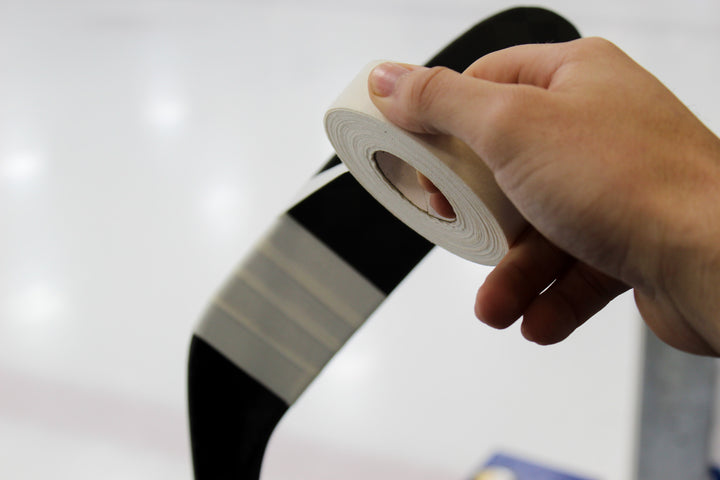
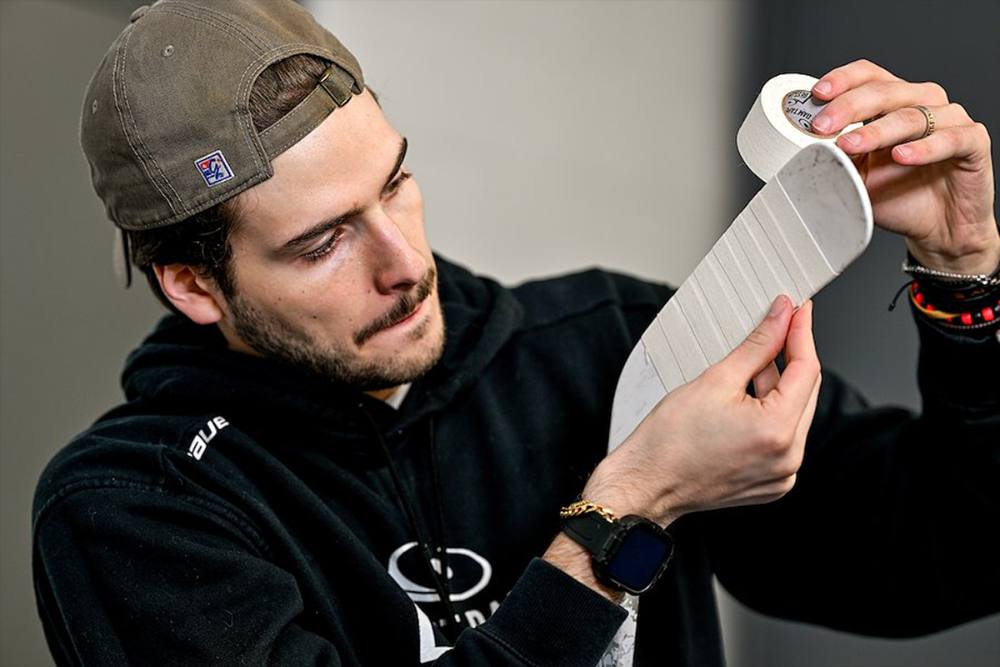
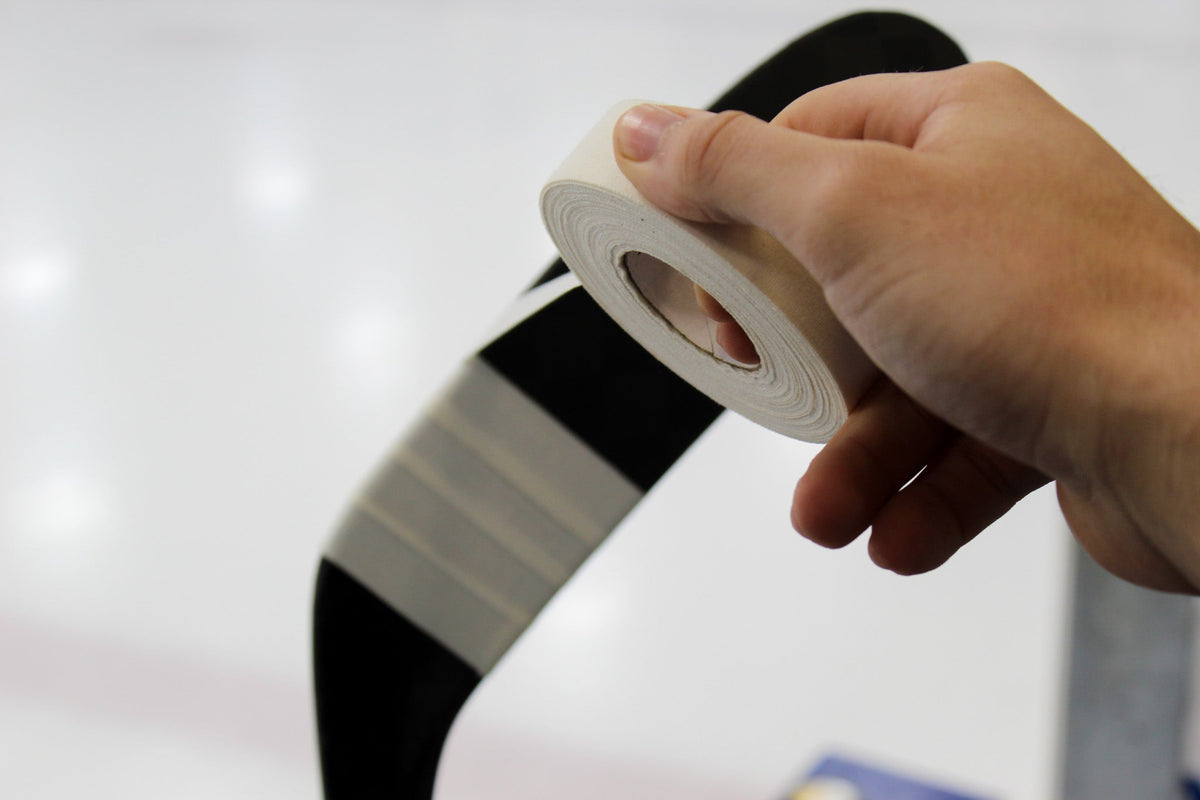
Application: After applying a base layer of tape covering the entire blade, add a second layer using a spiral pattern. Instead of smooth overlapping wraps, angle the tape so each wrap sits adjacent to the previous wrap without overlap.
This creates raised ridges running diagonally across the blade face. The ridges run from heel to toe at approximately 30-45 degree angles.
Ridge Spacing: Space ridges 0.25-0.5 inches apart. Closer spacing (0.25 inches) provides maximum grip but feels less natural for shooting. Wider spacing (0.5 inches) offers a better compromise for centers who take regular shifts and need shooting capability.
Functional Advantage: The ridges bite into the puck surface during initial contact, reducing slippage when pulling or pushing. The diagonal angle follows the natural motion path of most faceoff techniques.
Top NHL centers using spiral ridge variations include Patrice Bergeron, whose faceoff success rate consistently exceeds 60%. While technique is the primary factor, equipment optimization contributes to that elite performance.
Pattern 2: The Finger Wells
Best For: Centers using quick-pull techniques who vary their hand positioning
Application: Apply a standard base layer covering the entire blade. Then add small concentrated tape buildups at three specific locations corresponding to index finger, middle finger, and ring finger positions when gripping the stick.
Create each well by wrapping 3-4 tight loops of tape in a circular pattern approximately 0.75 inches in diameter. These buildups should be positioned in a line running parallel to the blade's length, spaced according to your natural finger spacing (typically 0.75-1 inch apart).
Placement Location: Position the finger wells in the blade's lower third, approximately 2-3 inches up from the heel. This places them where your bottom hand contacts the stick during faceoff stance.
Functional Advantage: The wells provide instant tactile feedback about hand position, allowing micro-adjustments without visual confirmation. They also create concentrated grip points that require less overall hand pressure, reducing fatigue during games with frequent faceoffs.
Colorado's Nathan MacKinnon has used finger well variations, contributing to his 55-%-plus faceoff success despite being known primarily as a scoring center rather than defensive specialist.
Pattern 3: The Horizontal Ripple
Best For: Centers using leverage-based techniques who press down on the puck
Application: Apply a base layer, then add a second layer using short horizontal segments rather than continuous wraps. Each segment should extend only 2-3 inches across the blade face before cutting and starting a new segment.
Position segments so they create horizontal ridges perpendicular to the blade's length. Overlap each new segment with the previous one by approximately 50% to create a ripple effect.
Ridge Spacing: Create 6-8 distinct ridges across the blade's length from heel to toe, with approximately 0.5 inches between ridge peaks.
Functional Advantage: Horizontal ridges provide maximum resistance against forward-backward puck movement, which is exactly what occurs during leverage-based faceoff techniques. The perpendicular orientation prevents the puck from sliding during the downward press and pull motion.
Centers who use primarily strength-based techniques, like Ryan O'Reilly during his Selke Trophy seasons (61% faceoff success), often employ horizontal pattern variations.
Pattern 4: The Hybrid Zone
Best For: Centers who adjust technique based on game situation and need versatility
Application: Divide the blade into two distinct zones—heel section and toe section—with different grip patterns for each.
In the heel third of the blade, apply the horizontal ripple pattern described above. This zone handles most defensive-zone faceoffs where leverage and strength techniques dominate.
In the remaining two-thirds of the blade, apply the spiral ridge pattern. This zone handles offensive-zone faceoffs where quick pulls and shooting after winning the draw are priorities.
Transition Point: The transition between patterns should be gradual, not abrupt. Overlap the two patterns for 1-2 inches in the middle of the blade to prevent a sharp edge that affects feel.
Functional Advantage: This approach optimizes for different faceoff techniques without requiring stick changes. It also accommodates the reality that centers need to shoot and pass from their faceoff stick, not just win draws.
Thickness Recommendations for Leverage
Tape thickness affects leverage mechanics during faceoffs by changing the blade's effective dimensions and contact characteristics.
Standard Thickness Baseline
A typical shooting-optimized tape job uses 1-2 layers of tape coverage, resulting in approximately 0.5-1mm of added thickness to the blade surface. This minimal addition preserves natural blade feel for shooting.
Faceoff Thickness Targets
Effective faceoff tape jobs use 2-4 layers of coverage, resulting in 1-2mm of added thickness. This represents a 100-200% increase over standard taping.
The added thickness provides several mechanical advantages:
Increased Contact Surface: Thicker tape creates a larger puck contact area, reducing the precision required for effective initial contact.
Enhanced Leverage: The additional bulk effectively lengthens the lever arm during pulling motions, providing mechanical advantage that translates to increased force on the puck.
Improved Puck Control: Thicker tape increases the time the puck remains in contact with the blade during the draw, providing an extended control window.
Layering Strategy for Thickness
Achieve optimal thickness through strategic layering rather than simply wrapping more tape randomly:
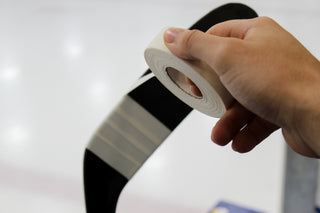
Base Layer: Apply one complete coverage layer using standard smooth wrapping technique. This provides adhesion to the blade surface.
Buildup Layer: Add a second complete layer, but increase overlap ages to 60-70% instead of the standard 50%. This begins building thickness while maintaining structural integrity.
Pattern Layer: Add the third layer using your chosen grip pattern (spiral ridge, finger wells, etc.). This layer provides functional grip while adding more thickness.
Optional Fourth Layer: For centers who heavily prioritize faceoffs over shooting, add a fourth pattern layer in the heel section only. This creates maximum thickness where most faceoff contact occurs while keeping the toe section suitable for shooting.
Thickness Limitations
Beyond 2mm of added thickness, diminishing returns occur. Excessive thickness makes the stick feel unwieldy for regular play and can actually reduce faceoff effectiveness by making the blade too rigid for technique adjustments.
Most elite centers settle on 1.5mm as the optimal balance—enough thickness for leverage advantages without compromising overall stick handling.
Placement Zones for Different Faceoff Techniques
Where you concentrate tape buildup and grip patterns depends on your primary faceoff technique.
Technique 1: The Tie-Up and Pull
Centers using this technique press their blade against the opponent's stick, then pull back quickly.
Optimal Placement Zone: Middle section of the blade, extending from approximately 2 inches up from the heel to 5 inches from the heel.
This zone makes initial contact with both puck and opponent's stick. Concentrate your grip pattern and thickness buildup in this area.
Use standard coverage in the toe section to maintain shooting capability when you win offensive zone draws cleanly and have shooting opportunities.
Technique 2: The Quick Forehand Pull
This technique involves beating the opponent to the puck and pulling it directly back to your defenseman in one motion.
Optimal Placement Zone: Heel section, the bottom 2-3 inches of the blade.
The heel makes primary puck contact in this technique. Maximize thickness and grip pattern concentration in this small zone while keeping the rest of the blade relatively standard.
This approach is popular among centers who win faceoffs primarily through speed and timing rather than strength or leverage.
Technique 3: The Backhand Push
Some centers excel at backhand faceoff techniques, particularly in situations where they can dictate the draw angle.
Optimal Placement Zone: Entire blade with emphasis on middle section, but applied to the backhand side rather than forehand side.
This requires tape application to the back of the blade (the side facing away from you in your stance). Use the same layering and pattern principles, but understand that backhand tape jobs wear faster because they see less use in regular play.
Most centers using backhand techniques maintain this as a secondary stick rather than their primary, switching based on matchup and zone.
Technique 4: The Leverage Press
This strength-based technique involves pressing down on the puck with the blade's middle section, using body weight for advantage.
Optimal Placement Zone: Broad middle section, extending from 1 inch above the heel to 6 inches from the heel.
This technique distributes force across a larger blade area, so expand your buildup zone accordingly. The horizontal ripple pattern works particularly well for this technique since it resists the forward-sliding forces generated during the press motion.
Pro Center Examples and Their Setups
Analyzing equipment choices of elite centers provides practical insights:
Patrice Bergeron (Career 61% Faceoff Success)
Bergeron used a moderate thickness buildup (approximately 1.5mm) with a spiral ridge pattern through the middle section of his blade. His setup emphasized consistency and versatility across all zones rather than specialization for one technique.
The key element was ridge spacing—Bergeron used slightly wider spacing (0.4-0.5 inches) that provided grip without sacrificing shooting touch. This allowed him to take regular shifts and produce offensively while dominating the faceoff circle.
Sidney Crosby (Career 52% Faceoff Success)
Crosby's faceoff tape job evolved throughout his career. In recent seasons, he adopted a hybrid zone approach with horizontal ripples in the heel section for defensive zone draws and spiral ridges in the middle and toe sections.
His thickness buildup is relatively modest (1.2-1.5mm) because he prioritizes shooting capability and can't sacrifice blade feel. The grip patterns compensate for reduced thickness.
Ryan O'Reilly (Multiple Seasons Above 60%)
O'Reilly uses one of the most specialized faceoff tape jobs in the NHL, with approximately 2mm thickness in the heel section and aggressive horizontal ripple patterns.
His setup is heavily optimized for leverage-based techniques, reflecting his strength-first approach to draws. The trade-off is reduced shooting touch from that stick, which he mitigates by changing to a shooting stick when taking offensive zone shifts after icing calls.
Elias Lindholm (58-60% Range)
Lindholm employs a finger wells pattern with moderate thickness (1.3-1.5mm). His setup reflects a technique-over-strength approach, using hand positioning precision and quick timing rather than leverage.
The wells are positioned slightly higher on the blade (3-4 inches from heel) than other patterns, corresponding to his distinctive faceoff grip.
Testing Methodology: Finding Your Optimal Setup
Rather than copying a pro's setup directly, test systematically to find what works for your technique and playing style.
Testing Protocol
Week 1: Establish baseline using your current tape job. Track faceoff success rate by zone (defensive, neutral, offensive) for 3-5 games or practices with significant faceoff repetitions.
Week 2: Test spiral ridge pattern with moderate thickness (1.5mm). Track success rates using the same methodology. Note any specific situations where the pattern helped or hindered.
Week 3: Test horizontal ripple pattern with the same 1.5mm thickness. Compare results to both baseline and Week 2.
Week 4: Test your top-performing pattern from Weeks 2-3 with adjusted thickness (1.0mm, then 2.0mm in separate sessions). Determine optimal thickness for your technique.
Week 5: Test hybrid variations combining elements that performed best in previous weeks.
Metrics to Track
Beyond raw success: age, track these detailed metrics:
Clean Wins: Draws where you gained complete possession without scramble or opponent contact. These indicate your setup's grip is working well.
Tie-Ups: Draws where you tied up the opponent's stick but neither side won cleanly. Excessive tie-ups might indicate your grip pattern is too aggressive, causing your blade to catch on the opponent's stick.
Losses: Note whether losses occurred due to timing, technique, or equipment issues. If the puck consistently slips off your blade during initial contact, your grip pattern may need adjustment.
Shooting Feel: After faceoff wins, how comfortable was shooting or passing from that stick? If your specialized faceoff tape dramatically hurts shooting, the optimization has gone too far.
Competition Level Differences
Appropriate faceoff tape optimization varies by competitive level:
Youth and High School
Younger players should focus on developing proper technique before investing heavily in specialized equipment. Use moderate grip patterns (spiral ridge with 0.5-inch spacing) and standard thickness (1.0-1.5mm).
The goal at this level is building foundational skills. Overly specialized equipment can become a crutch that limits long-term development.
College and Junior
Competitive amateur players can benefit from specialized faceoff tape jobs. Use full grip patterns with 1.5-2.0mm thickness in priority zones.
Players at this level have developed consistent techniques that warrant equipment optimization. Experiment with different patterns to find what enhances your specific approach.
Professional and Elite Adult
Elite players should maximize faceoff-specific optimization, potentially maintaining separate faceoff and shooting sticks.
Use aggressive grip patterns, 1.5-2.0mm+ thickness, and replace tape frequently (every 2-3 games) to maintain optimal performance. The competitive margins at this level justify specialized equipment approaches.
Beer League and Recreational
Recreational centers should use moderate optimization that doesn't sacrifice shooting capability. A simple spiral ridge pattern with standard thickness (1.0-1.5mm) provides faceoff benefits without requiring separate sticks or frequent re-taping.
Tape Quality Impact on Faceoff Performance
Premium tape becomes especially important for faceoff-specific applications because the demands differ from standard use:
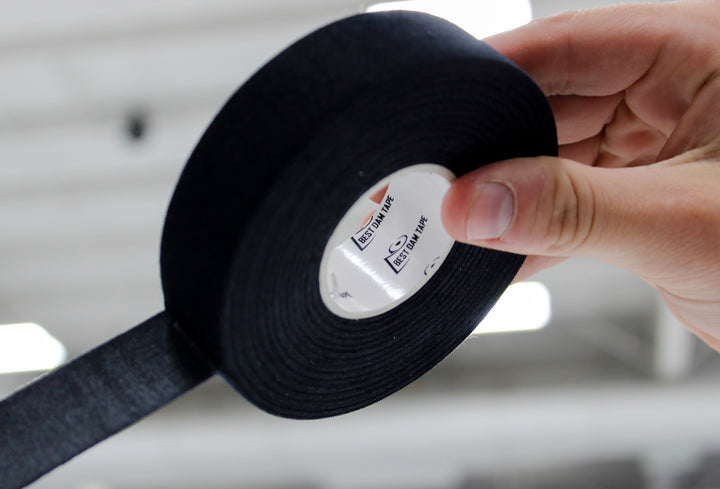
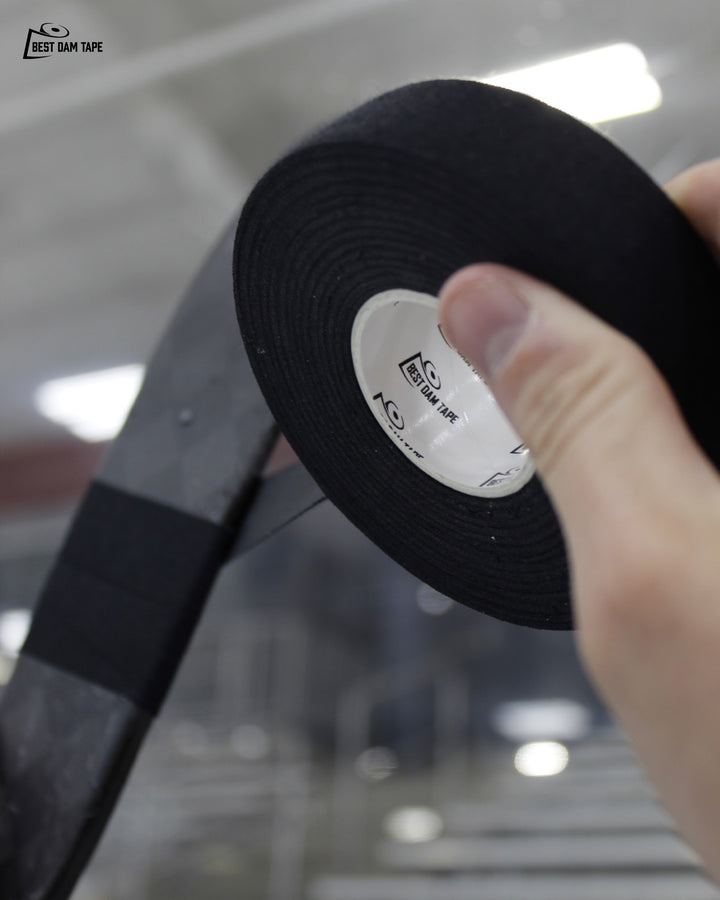
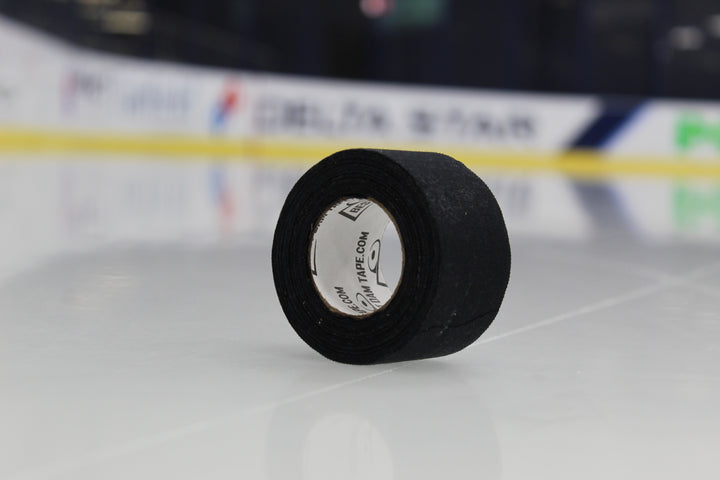
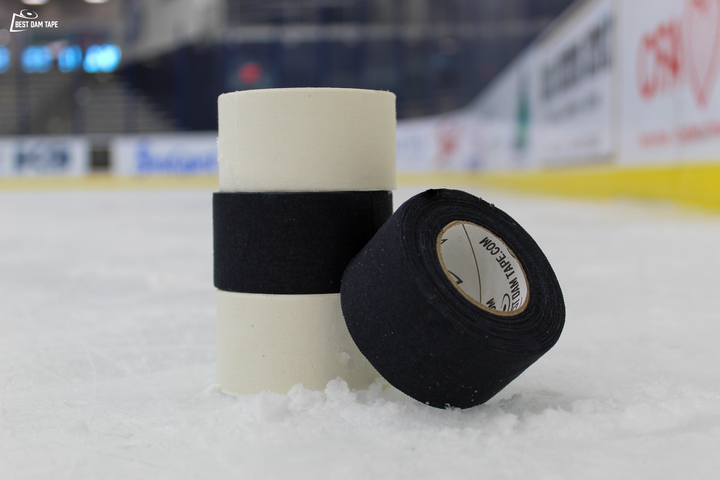
Consistent Layering: Building 2-4 layers requires tape that maintains uniform thickness when stretched. Budget tape often thins unpredictably during application, making it impossible to achieve consistent buildup. Best Dam Tape's cloth construction provides reliable layering characteristics.
Grip Texture: The tape's surface texture directly affects puck grip during faceoffs. Best Dam Tape's fabric weave creates natural friction without requiring specialized patterns, though patterns still enhance performance.
Durability Under Impact: Faceoff-zone tape takes concentrated abuse from repeated puck impacts in the same blade area. Premium adhesive and material construction maintain integrity longer, reducing re-taping frequency.
Moisture Resistance: Faceoff circles often have excess ice shavings and moisture. Superior adhesive formulations maintain bond strength in these conditions, preventing mid-game tape failure during critical draws.
Centers taking 20+ faceoffs per game? Stock up with Best Dam Tape's hockey tape designed for the demanding abuse of the faceoff circle. Teams can save with our bulk ordering program.
Maintenance and Replacement Schedule
Specialized faceoff tape jobs require more frequent maintenance than standard taping:
Game Schedule
For centers taking 20+ faceoffs per game, replace tape every 2-3 games. The concentrated wear in grip zones degrades performance even when the tape still looks acceptable.
Before each game, inspect the heel and middle sections where faceoff contact occurs. If you see compressed areas, torn tape, or flattened ridges, replace immediately.
Practice Considerations
Use a separate practice stick with standard taping for most drills and line rushes. Reserve your specialized faceoff stick for faceoff practice repetitions and games.
This approach extends the life of your game tape job while allowing unlimited practice of skating, shooting, and passing skills without concern for faceoff-specific tape degradation.
Building Your Faceoff Tape Job
Based on the patterns and principles outlined above, here's a step-by-step process for creating an effective faceoff-optimized tape job:
-
Identify your primary faceoff technique and corresponding optimal placement zone
-
Apply one complete base layer using standard wrapping technique
-
Apply a second layer with 60-70% overlap to build thickness foundation
-
Apply your chosen grip pattern (spiral ridge, horizontal ripple, or finger wells) in your priority zone
-
Add optional fourth layer in heel section if using leverage-based techniques
-
Test the setup in practice before game use, noting feel for both faceoffs and shooting
-
Track performance metrics for 3-5 games to assess effectiveness
-
Adjust pattern, thickness, or placement based on results
Remember that the optimal setup is personal—what works for Bergeron might not work for you. Use these frameworks as starting points, then refine based on your specific technique and playing style.
The Faceoff Advantage
Elite centers win 60% of their draws. Average centers win 50%. That 10% age point difference translates to 2-3 additional possessions per game—possessions that can determine game outcomes.
Specialized faceoff tape jobs won't transform a 45% center into a 60% center. Technique, timing, and strength matter more than equipment. But for centers who have developed solid foundational technique, equipment optimization can provide the 3-5% age point improvement that separates good from elite.
The investment is minimal: slightly more tape, a few extra minutes of preparation, and willingness to maintain separate sticks for optimal performance. The return is measurable improvement in one of hockey's most important individual battles.
Whether you're adopting Bergeron's spiral ridge pattern or developing your own hybrid variation, the goal remains the same: turning faceoff circle into a competitive advantage through intelligent equipment optimization.