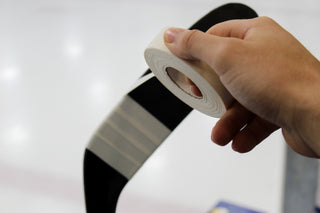



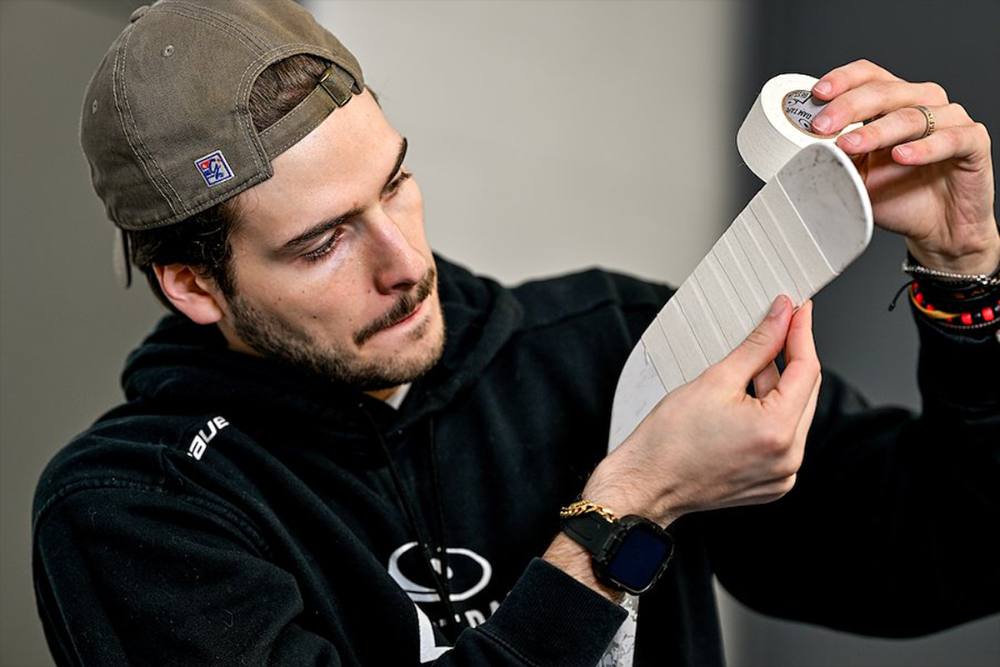
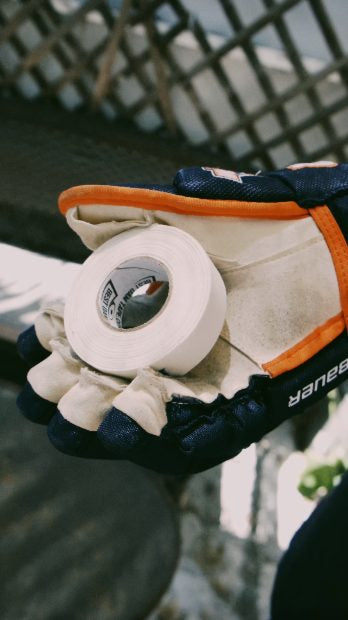




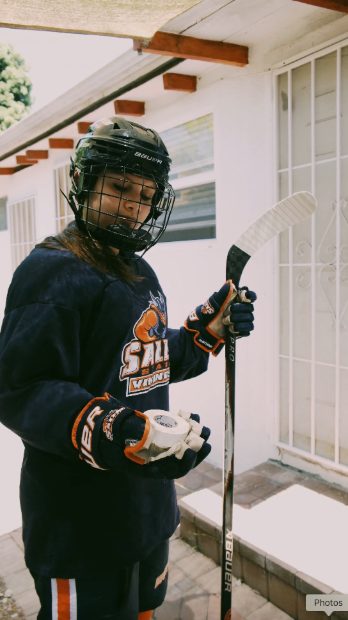

A full-blade tape job covers most of the blade from heel toward toe. A toe-only job concentrates cloth near the tip and leaves more of the blade exposed. The useful question is which surface and coverage pattern you prefer, not which one looks most professional.
Two players can use the same stick and choose very different wraps. A tape pattern is a setup choice, not a shortcut to somebody else's hands.
What each pattern changes
| Detail | Full blade | Toe-only |
|---|---|---|
| Cloth coverage | Across most of the blade | Concentrated near the toe |
| Exposed blade | Less, depending on the finish | More toward the heel and middle |
| Application | More area to wrap and smooth | Less area, but the rounded tip still needs care |
| What to inspect | Bottom edge, overlaps and both ends | Taped tip, transition edge and exposed blade |
When to start with full coverage
If you are learning to tape, full coverage gives you a clear baseline. Keep the overlap consistent and make the finish repeatable. You can then adjust the pattern gradually rather than changing everything before each game.
Full coverage does not mean piling on layers. A neat single overlapping sequence and a deliberate toe finish are different from wrapping repeatedly over wrinkles.
When to experiment with less coverage
If you are curious about the feel of the exposed blade, try a smaller taped area during practice. Keep the tape type and handle setup unchanged so you can focus on that one difference.
Do not interpret one great shot or one missed pass as proof. Familiarity, puck condition, fatigue and the drill itself can all change how a session feels.
A useful practice comparison
- Photograph your normal setup and note the width and coverage.
- Run the same short sequence of receiving passes, controlled handling and shots.
- Try the alternative pattern at another comparable practice.
- Record comfort and consistency, then inspect tape wear and exposed areas.
- Repeat before deciding what stays in your game setup.
This is a personal comparison, not a laboratory performance test. There is no measured claim here that either pattern increases shot speed or scoring.
Does less coverage always use less tape?
Not necessarily. A small area wrapped many times can use substantial material. To compare consumption, measure what you actually unwind for each complete job, including the finishing pieces.
What if the blade is damaged?
Neither pattern fixes structural damage. Check the stick manufacturer's guidance if you find cracks or sharp splinters. A fresh wrap should never be used to conceal a problem that needs inspection.
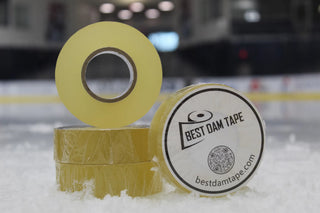
Try the setup with white cloth tape or black cloth tape. For application basics, see how to tape a hockey stick.