












Team Manager Bulk Buying Guide: Case Sizes, Cost Per Roll, Reorder Timing
Managing equipment for a hockey team is no small task. Between coordinating practice times, tracking uniform inventory, and keeping parents informed, the last thing you need is to run out of tape right before a tournament. Yet it happens to teams all the time. Often because team managers don't have clear guidance on how much tape to order, when to reorder, or how to maximize their budget.
This comprehensive guide is designed specifically for team managers, coaches, and anyone responsible for stocking a team's equipment supplies. Whether you're managing a youth house league team or a competitive travel program, understanding bulk buying strategies will save you money, prevent last-minute scrambles, and ensure your players always have what they need.
Understanding Your Team's Tape Usage
Before you can make smart bulk buying decisions, you need to understand your team's actual consumption patterns. This varies significantly based on several factors, and getting it right is the foundation of efficient ordering.
Team Size Impact: A 15-player roster will obviously use less tape than a 20-player roster, but the relationship isn't perfectly linear. Larger teams often share tape more freely, have backup players who tape less frequently, and benefit from economies of scale in purchasing.
Skill Level and Age: Younger players (8-10 years old) typically use less tape because they're not re-taping as frequently and often share sticks between games. Players aged 11-14 start developing personal preferences and tape more regularly. High school and older competitive players are the heaviest users: they're re-taping blades frequently, some even between periods, and taking pride in their stick maintenance.
Practice and Game Frequency: A house league team with one practice and one game per week uses dramatically less tape than a travel team with three practices, two games, and regular tournament weekends. Account for your actual ice time, not just the minimum.
Individual Habits: Some players tape their blade before every game religiously. Others use the same tape job for a week. Some use extensive grip tape covering 12+ inches of shaft. Others use minimal grip coverage. These individual variations average out across a team, but it's worth being aware of your team's general tendencies.
The Usage Calculator: Finding Your Team's Number
Here's a practical formula to estimate your team's monthly tape needs. This approach accounts for the major variables and gives you a reliable baseline.
Basic Formula: (Team Size × Games/Practices per Month × Tape Jobs per Event) ÷ Usage Rate = Monthly Rolls Needed
Let's break down each component.
Tape Jobs per Event: For younger players (under 12), estimate 0.5 tape jobs per event—they're not re-taping constantly. For intermediate players (12-16), estimate 0.75 tape jobs per event—regular maintenance but not obsessive. For older/competitive players (16+), estimate 1.0 tape jobs per event, frequent re-taping for optimal performance.
Usage Rate: One roll of blade tape typically provides 4 to 5 blade tape jobs. One roll of grip tape covers 2 to 3 complete grips (12 to 15 inches each).
Example Calculation - Youth House League Team: 15 players, 8 ice times per month, 0.5 tape jobs per event. That's 15 × 8 × 0.5 = 60 tape jobs per month. At 4.5 jobs per roll, you need about 13-14 rolls per month of blade tape. Grip tape is less frequent—maybe 1 grip update every 2-3 weeks per player. That's roughly 7-8 rolls per month.
Example Calculation - Competitive Travel Team: 18 players, 16 ice times per month, 0.75 tape jobs per event. That's 18 × 16 × 0.75 = 216 tape jobs per month. You'll need approximately 48 rolls of blade tape per month. Grip tape at higher levels is 10-12 rolls per month.
Add a 20% buffer to your calculations to account for tournaments, extra practice ice, and players experimenting with new taping styles. It's better to have slightly too much than to run out mid-season.
Case Sizes and Volume Tiers
Now that you know roughly how much tape your team needs, let's look at typical bulk purchasing options and how they align with different team types.
6-Pack: Individual or Small Team Option. Best for personal use, backup supply, or very small teams (8-10 players) with low usage. Generally costs $4.00-$5.00 per roll. Suitable for 2-3 weeks for a small team.
12-Pack: Small Team or Monthly Supply. Appropriate for youth house league teams or one month's supply for small programs. Costs approximately $3.50-$4.50 per roll. Provides meaningful cost savings over individual purchases.
24-Roll Case: Standard Team Supply. The most popular option for competitive youth and high school teams. Costs roughly $3.00-$3.75 per roll. Covers 1-2 months for most mid-sized teams. This is often the sweet spot for balancing cost savings with storage convenience.
48-Roll Cases: High-Volume Team Supply. Designed for large teams, club organizations, or full-season stocking. Costs approximately $2.50-$3.25 per roll. Provides maximum per-roll savings. Ideal for organizations managing multiple teams or planning ahead for entire seasons.
The key insight is that per-roll cost decreases significantly as volume increases. A 24-roll case often costs 25-30% less per roll than buying 6-packs, and 48-roll cases can save 35-40% compared to small purchases.
Cost Comparison: Real Numbers for Real Teams
Let's look at transparent pricing scenarios so you can understand the true savings potential of bulk buying.
Scenario 1: Youth House League Team, 3-Month Season. Usage estimate: 40 rolls blade tape, 20 rolls grip tape (60 rolls total). Buying 6-packs at $5.00 per roll: $300 total. Buying two 24-roll cases and one 12-pack at $3.25 per roll: $195 total. Savings: $105, or 35%.
Scenario 2: Competitive Travel Team, Full Season (October-March). Usage estimate: 280 rolls blade tape, 70 rolls grip tape (350 rolls total). Buying 12-packs at $4.00 per roll: $1,400 total. Buying seven 48-roll cases at $2.75 per roll: $962.50 total. Savings: $437.50, or 31%.
Scenario 3: High School Varsity Program, Full Year. Usage estimate: 400 rolls blade tape, 100 rolls grip tape (500 rolls total). Individual purchases at $5.00 per roll: $2,500 total. Buying ten 48-roll cases at $2.60 per roll: $1,300 total. Savings: $1,200, or 48%.
These savings are substantial enough to fund other team needs: extra practice ice, tournament fees, or equipment upgrades. For budget-conscious programs, bulk buying isn't optional; it's essential.
Reorder Timeline Guide: Never Run Out Again
Having the right amount of tape is worthless if you run out before your next order arrives. Strategic reorder timing prevents emergency shortages and ensures consistent availability.
The 25-% Rule: Place your reorder when you've used 75% of your current supply—meaning 25% remains. This provides a safety buffer for shipping delays, unexpected usage spikes, or tournament weekends.
Calculate Your Depletion Rate: Track how quickly your team goes through a case. If your 24-roll case lasts 6 weeks, you're using about 4 rolls per week. At that rate, reorder when 6 rolls remain, giving you 1.5 weeks of buffer plus shipping time.
Season Planning Approach: For teams with defined seasons, order your entire season's supply (or at least half) before the season starts. This locks in pricing, eliminates mid-season ordering stress, and often qualifies you for maximum volume discounts. Then place one mid-season reorder if needed.
Tournament Considerations: Always order an extra case before major tournaments. Usage spikes dramatically during tournament weekends due to multiple games, nervous re-taping, and the reality that several players will want fresh tape for each game.
Off-Season Storage: If you order a full season's supply upfront, proper storage becomes critical. Keep cases in a cool, dry location away from direct sunlight. Tape can last 12-18 months when stored properly, so ordering ahead isn't risky from a shelf-life perspective.
Storage Best Practices for Bulk Orders
You've invested in bulk purchasing to save money. Now protect that investment with proper storage.
Temperature Control: Store tape between 50-80°F. Extreme heat can soften adhesive and cause rolls to stick together. Extreme cold can make tape brittle and harder to apply smoothly.
Humidity Management: High humidity can affect adhesive performance over time. Store cases off the ground (humidity rises from concrete floors) and in areas with stable humidity levels. Avoid storage in non-climate-controlled sheds or garages in humid climates.
Organization Systems: Label cases with purchase date and intended use period (e.g., "October-November supply"). This helps you rotate stock properly—use older inventory first. Keep blade tape and grip tape separated and clearly labeled so players can grab what they need quickly.
Accessibility: Store team tape supplies where players or coaches can easily access them during practice or games, but secure enough that full cases don't disappear. Many teams keep one open case at the rink and store backup cases separately.
Budget Template Concepts
Smart team managers budget for tape as a line item, not an afterthought. Here's how to integrate tape costs into your team budget planning.
Annual Tape Budget Formula: (Average Monthly Usage × Season Length in Months) × Cost Per Roll with Bulk Discount + 15-% Emergency Buffer
For example, a competitive team using 50 rolls per month over a 7-month season at $3.00 per roll needs to budget: 50 × 7 × $3.00 = $1,050, plus 15% buffer = $1,207.50 total tape budget.
Budget Allocation Strategies: Some teams include tape in registration fees. Others fundraise specifically for equipment supplies. Many programs allocate 3-5% of their total equipment budget to tape and consumable supplies.
Tracking and Accountability: Keep a simple spreadsheet tracking purchases, cost per roll, and usage patterns. This data becomes invaluable for budgeting next season and justifying bulk purchases to team administration or parent boards.
Transparent Pricing Structure: What to Expect
Understanding pricing helps you evaluate vendors and ensure you're getting fair value.
Retail vs. Bulk Pricing: Individual rolls typically retail for $4.50-$6.00 depending on quality and location. Small multipacks (2-4 rolls) offer minimal discount, maybe 10-15%. True bulk cases (24+ rolls) should offer 30-45% savings off individual retail pricing.
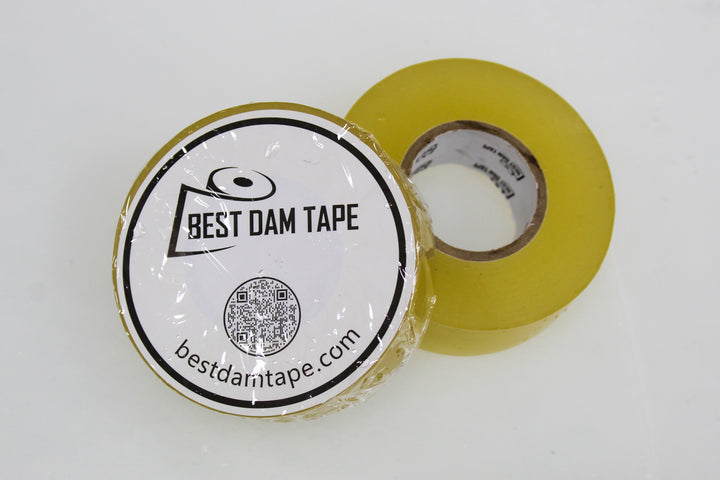
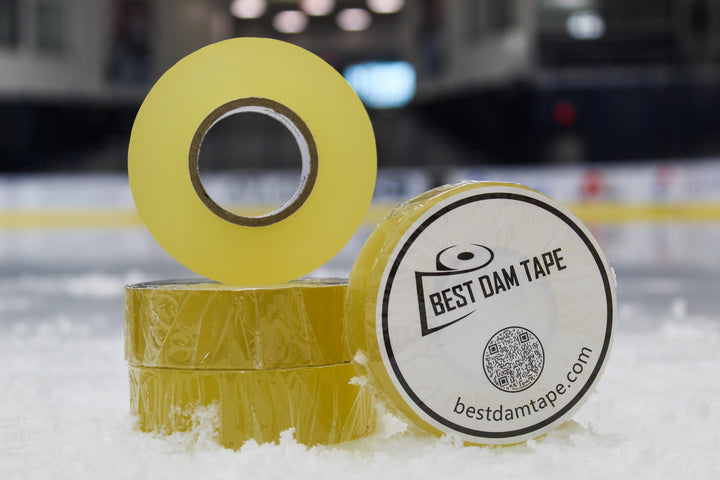
Quality vs. Price Balance: The cheapest tape isn't always the best value. If discount tape frays after one period, forcing players to re-tape more frequently, you'll actually use more rolls over the season. Best Dam Tape offers premium quality at competitive bulk pricing. Meaning your per-game cost is often lower than cheaper alternatives because the tape lasts longer.
Shipping Considerations: Bulk orders are heavy. Factor shipping costs into your total price analysis. Some vendors offer free shipping over certain thresholds. Structure your orders to hit those thresholds when possible.
Volume Discount Negotiations: For large organizations managing multiple teams, ask about custom volume pricing. Many suppliers will negotiate on orders of 10+ cases, especially for recurring customers.
Making the Bulk Buying Decision
If you're managing a team of 12 or more players, bulk buying almost always makes financial sense. The question isn't whether to buy in bulk, but what volume tier matches your needs.
Decision Framework: Calculate your season's total needs. Compare total cost at different volume tiers (include shipping). Factor in storage capacity. Can you physically store 8 cases? Consider cash flow. Can your team afford larger upfront purchases or is spreading out 2-3 smaller orders better? Evaluate vendor reliability. Established brands like Best Dam Tape ensure consistent quality across bulk orders.
Start Conservative: If you're uncertain about usage rates, start with a 24-roll case for your first order. Track usage carefully for 4-6 weeks. Use that real data to size your next order more accurately. There's no penalty for starting smaller and scaling up once you have solid usage data.
Team Communication: Let players and parents know that team tape is available and how to access it. When players know they have reliable access to quality tape through the team, they're less likely to show up with subpar tape from wherever they could find it last-minute.
The best team managers are proactive, not reactive. They understand usage patterns, budget appropriately, order strategically, and never let their team run out of essential supplies. Tape might seem like a small detail, but it's one of those details that separates smoothly run programs from chaotic ones.
By implementing the strategies in this guide: calculating usage accurately, buying at appropriate volume tiers, timing reorders strategically, and storing supplies properly. You'll save money, reduce stress, and ensure your players always have the quality tape they need to perform their best.
Ready to Stock Your Team?
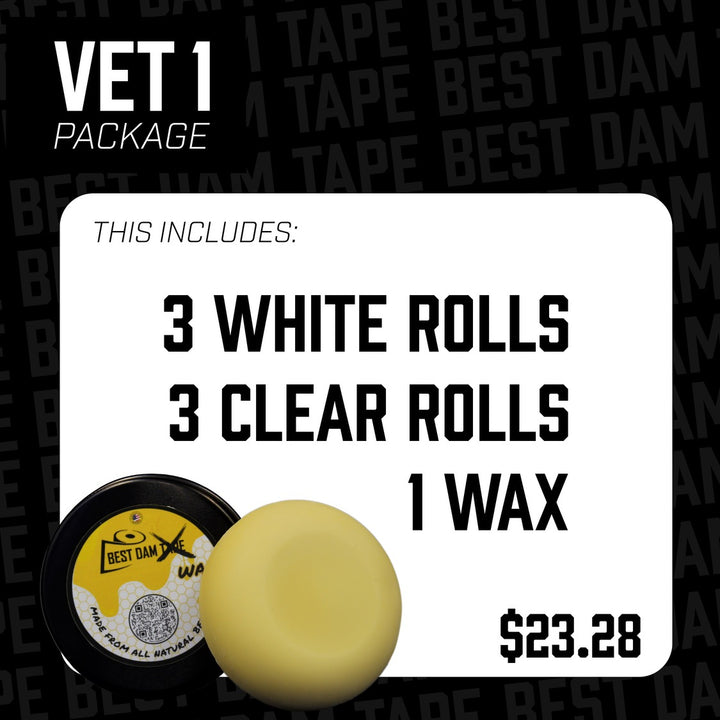
Explore Best Dam Tape's team bulk ordering program for the best value on premium hockey tape. Choose from:
-
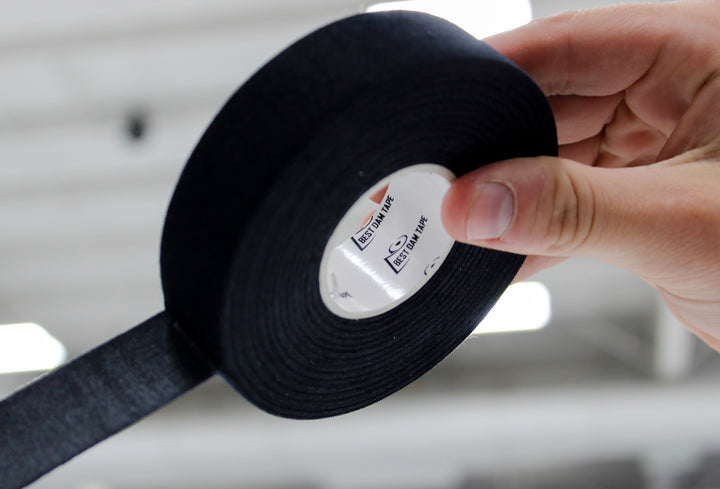
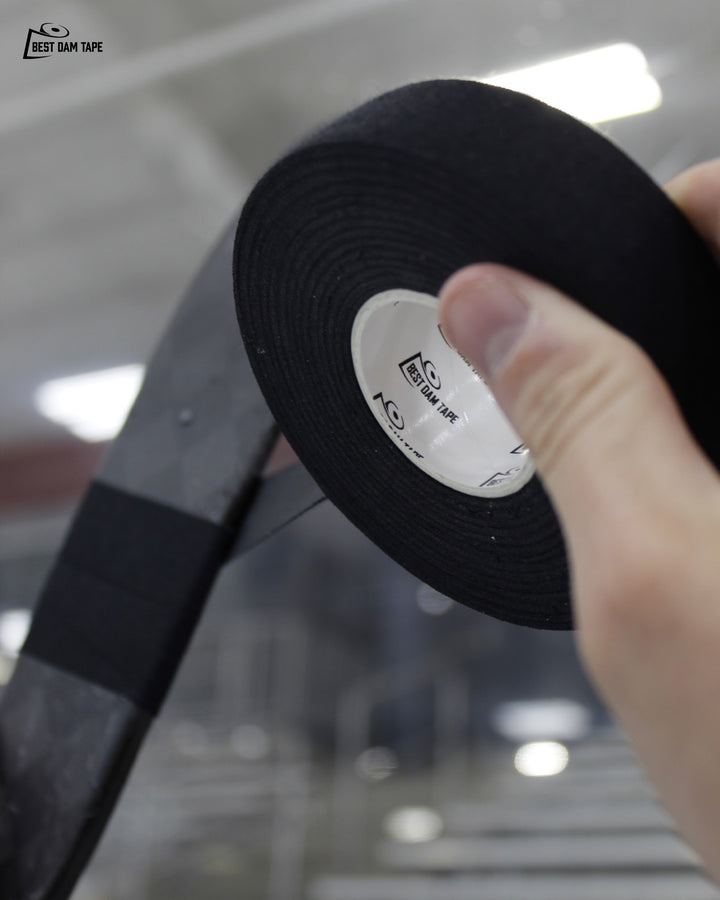
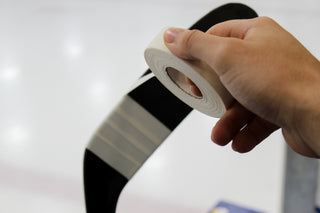
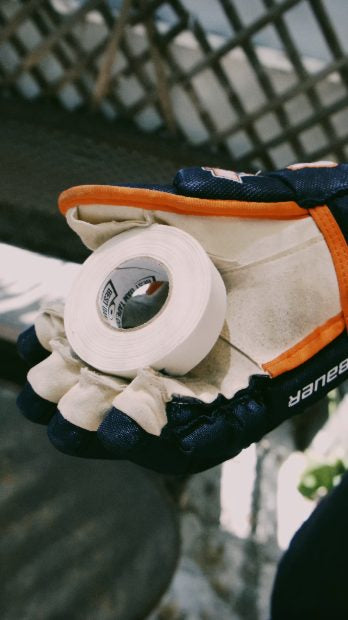
Cloth hockey tape for stick blades and grips
-
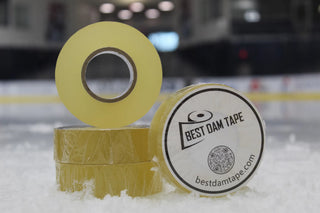
Clear shin guard tape for secure equipment fit
-
Stick wax for water resistance and puck control
Contact us for custom volume pricing on orders of 10+ cases. Get premium quality at team-friendly prices.