








Women's Hockey Grip Guide: Smaller-Hand Tape Patterns That Feel Right
For too long, hockey grip taping has been designed with one player in mind: a 6-foot-tall guy with large hands. But here's the reality: women's hockey is exploding in growth and visibility, with the PWHL bringing professional women's hockey to new heights, NCAA programs expanding, and youth participation reaching record numbers. Yet most taping guides still ignore a fundamental fact: players with smaller hands need different grip solutions.
This isn't about gender. It's about biomechanics and fit. Whether you're a female player, a younger athlete still growing, or any player with smaller hands, the standard grip patterns that work for larger hands often create discomfort, reduce control, and can even lead to injuries. It's time for a grip guide that actually addresses your needs.
Why Hand Size Changes Everything
The traditional hockey grip pattern was developed around an average adult male hand, which typically measures 7.4 to 8.1 inches from wrist to fingertip. Many female players and younger athletes have hands measuring 6.5 to 7.3 inches. A difference that might seem small but has significant implications for stick control.
When your hands are proportionally smaller, several biomechanical challenges emerge. Your fingers have to stretch farther to maintain grip points, creating tension and fatigue. Standard knob sizes force your hand into awkward positions, limiting wrist mobility for shooting and passing. The distance between your top and bottom hands affects leverage and power transfer. And perhaps most importantly, grip thickness that feels comfortable for larger hands can feel like gripping a baseball bat for smaller hands.
Understanding these differences isn't about limitations. It's about optimization. When your grip is tailored to your actual hand size, you gain better stick control, improved shot accuracy, reduced hand and wrist fatigue, lower risk of blisters and calluses, and more natural, fluid movements.
Comparing Hand Sizes and Grip Needs
Before diving into specific patterns, it helps to understand where your hands fall on the size spectrum and what that means for your grip needs.
Measuring Your Hand: Measure from the base of your palm to the tip of your middle finger. Under 7 inches is considered small; 7 to 7.5 inches is medium-small; 7.5 to 8 inches is medium; and over 8 inches is large.
Grip Implications by Size: For hands under 7 inches, you'll likely want a more compact knob, moderate grip thickness, and closer hand spacing. Hands from 7 to 7.5 inches typically benefit from medium knobs with customizable thickness and flexible hand positioning. Hands over 7.5 inches can often work with standard patterns, though personalization still helps.
The key insight is that smaller hands don't just need "less" of everything. They need different proportions, strategic thickness placement, and knob designs that match their biomechanics.
Knob Variations for Smaller Hands
The knob is where most standard taping goes wrong for smaller hands. A huge, bulky knob might feel secure for players with large hands, but it can force smaller hands into inefficient positions and limit wrist flexibility.
The Compact Cylinder: This is often the best starting point for smaller hands. Instead of building a massive dome-shaped knob, create a moderate cylinder that's about 1 to 1.25 inches in diameter and extends roughly 1 inch from the top of the shaft. Wrap the tape directly over the butt end in tight, even layers, building up gradually. The result is a knob that fills your palm securely without forcing your fingers to overextend around it.
The Ergonomic Taper: Some players with smaller hands prefer a knob that tapers slightly from bottom to top, creating a more natural fit against the palm. Start with a wider base (about 1.25 inches) and taper to a slightly narrower top (about 1 inch). This design allows your palm to nestle into the knob while giving your fingers more natural contact points.
The Minimal Knob: If you have particularly small hands or prefer maximum wrist mobility, consider a minimal knob approach. Build up just enough tape to create a clear stopping point for your hand. About 0.75 inches of added thickness extending 0.75 inches from the shaft top. This works especially well for players who rely heavily on quick wrist movements and don't need a substantial knob for security.
Testing Your Knob: The right knob should feel like a natural extension of your hand. When you grip it, your palm should rest comfortably against it without your fingers straining. Your wrist should be able to move through its full range of motion without the knob interfering. And most importantly, it should feel secure without requiring a death grip.
Thickness Customization Strategies
Beyond the knob, the overall grip thickness dramatically affects comfort and control for smaller hands.
The Problem with One-Size-Fits-All: Standard grip taping often creates uniform thickness along the entire upper shaft. For larger hands, this feels consistent and comfortable. For smaller hands, it can make the stick feel like a broomstick: too thick to control efficiently, causing premature fatigue and reducing stick feel.
Strategic Thickness Zones: Instead of uniform thickness, create zones that match how your hands actually interact with the stick. Your top hand (near the knob) benefits from moderate thickness for comfort, typically 2 to 3 layers of tape with 50 % overlap. The middle zone, between your hands, can be thinner or even untaped depending on preference. And your lower hand position might need just 1 to 2 layers for tackiness without bulk.
The Gradual Build: Rather than starting with full thickness immediately below the knob, gradually build thickness over 2 to 3 inches. This creates a smooth transition that feels more natural and prevents the abrupt bulk change that can cause blisters.
Finding Your Ideal Thickness: Start conservative. Use just 1 to 2 layers of tape for your first attempt. Test it during stickhandling drills. If the stick feels slippery or you're gripping too hard to maintain control, add another layer. The goal is the minimum thickness that provides adequate grip. More isn't always better.
Comfort-First Approach: Blister Prevention and Hand Fatigue
For players with smaller hands, comfort issues often arise more quickly because of the increased grip tension required to control a poorly fitted stick.
Common Blister Locations: For smaller hands, blisters most frequently develop at the base of the index finger on the top hand, the palm heel where it meets the knob, and the webbing between thumb and index finger on the bottom hand. These locations tell you where your grip is compensating for poor fit.
Prevention Through Proper Fit: The best blister prevention is correct grip dimensions. When your knob and thickness are right for your hand size, you naturally grip with less tension. This reduced tension means less friction and dramatically fewer blisters.
Tape Texture Considerations: Some players with smaller hands prefer slightly rougher tape texture because it requires less grip pressure to maintain stick control. Best Dam Tape offers excellent texture that provides grip without requiring excessive hand tension, helping reduce both blistering and fatigue.
Hand Fatigue Factors: If your hands feel tired after one period, your grip setup likely isn't optimized. Fatigue usually indicates you're compensating—either the knob is too large, the overall thickness is too much, or the proportions don't match your biomechanics. Listen to your hands. Fatigue is feedback.
The Glove Factor: Remember that your taping needs to work with your gloves. Some players with smaller hands prefer lower-profile gloves, which require slightly different taping than bulkier gloves. Test your grip with your actual game gloves on, not bare hands.
Building Your Custom Pattern: Step-by-Step
Let's walk through creating a complete grip pattern optimized for smaller hands.
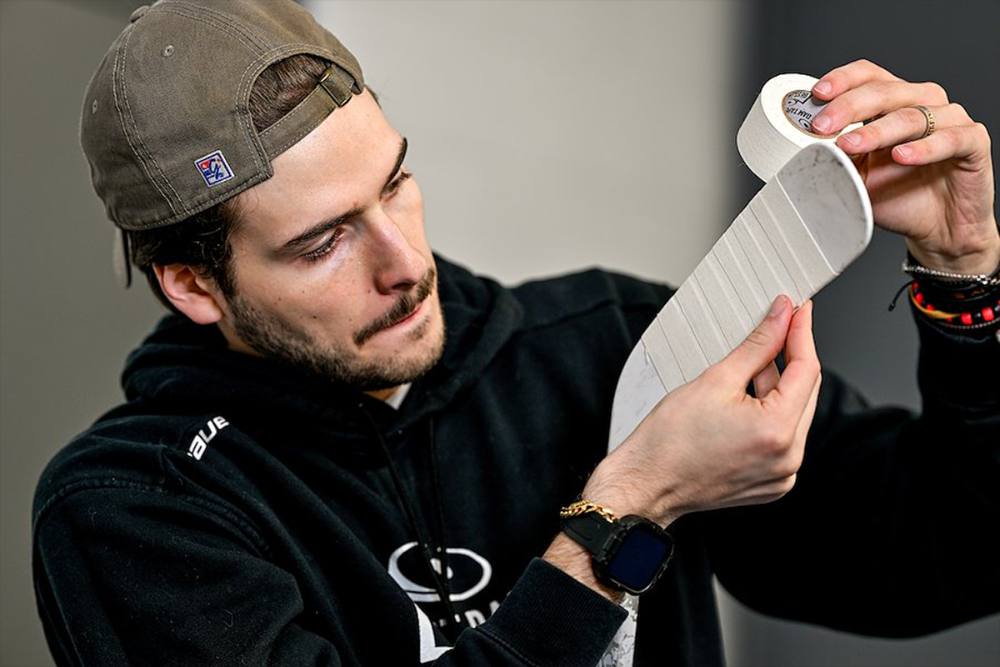
Step 1: Prepare the Shaft. Remove old tape and residue. Clean the shaft with rubbing alcohol and let dry. Starting with a clean surface ensures proper adhesion and consistency.
Step 2: Build Your Knob. Start at the top of the shaft. Wrap 5 to 7 tight layers directly over the butt end to create your base (compact cylinder style). Each wrap should overlap by about 75 %. The result should be a knob 1 to 1.25 inches in diameter extending about 1 inch.
Step 3: Create the Transition. Starting just below your knob, wrap 3 to 4 inches using 50 % overlap. This creates moderate thickness in your top-hand area. Use smooth, consistent tension—not too tight, which thins the tape, but firm enough to eliminate gaps.
Step 4: Taper to Bottom Hand. Depending on your preference, either continue with moderate thickness to your bottom-hand position or taper down to thinner coverage (shift to 25 % overlap for thinner zones). Many smaller-handed players prefer thinner coverage in the bottom-hand area for better stick feel.
Step 5: Test and Adjust. Put on your gloves and hold the stick in game position. Does the knob sit comfortably in your palm? Can you move your wrists freely? Does the grip thickness feel natural or like you're trying to hold onto a pipe? Make notes and adjust on your next taping.
Learning from the Pros: PWHL and NCAA Insights
While specific player grip preferences aren't always publicly documented, watching professional and college women's hockey reveals common patterns among elite players with smaller hands.
Many PWHL players use more moderate knobs than their male NHL counterparts, prioritizing wrist mobility for quick releases. You'll also notice that elite female players often use less tape overall on their grips, suggesting that confidence in stick control reduces the psychological need for excessive taping. Some players use distinctive colored tape patterns that likely serve as visual reference points for hand placement. A strategy that can help players with smaller hands maintain consistent, optimal positioning.
NCAA programs are increasingly educating players about personalized equipment fitting, including grip customization. Coaches recognize that cookie-cutter approaches don't serve all athletes equally.
Inclusive Approach: This Benefits All Smaller-Handed Players
While this guide focuses heavily on women's hockey because that's where the information gap is largest, these principles apply to any player with smaller hands. Youth players still growing into their adult size, adult players with naturally smaller hands regardless of gender, and even players with hand injuries requiring modified grip all benefit from understanding biomechanics-based customization.
The future of hockey equipment guidance is inclusive and individualized. Hand size is just one variable, but it's a crucial one that's been overlooked for too long.
Material Matters: Why Tape Quality Affects Small-Handed Players
For players with smaller hands who need precise grip customization, tape quality becomes even more critical.
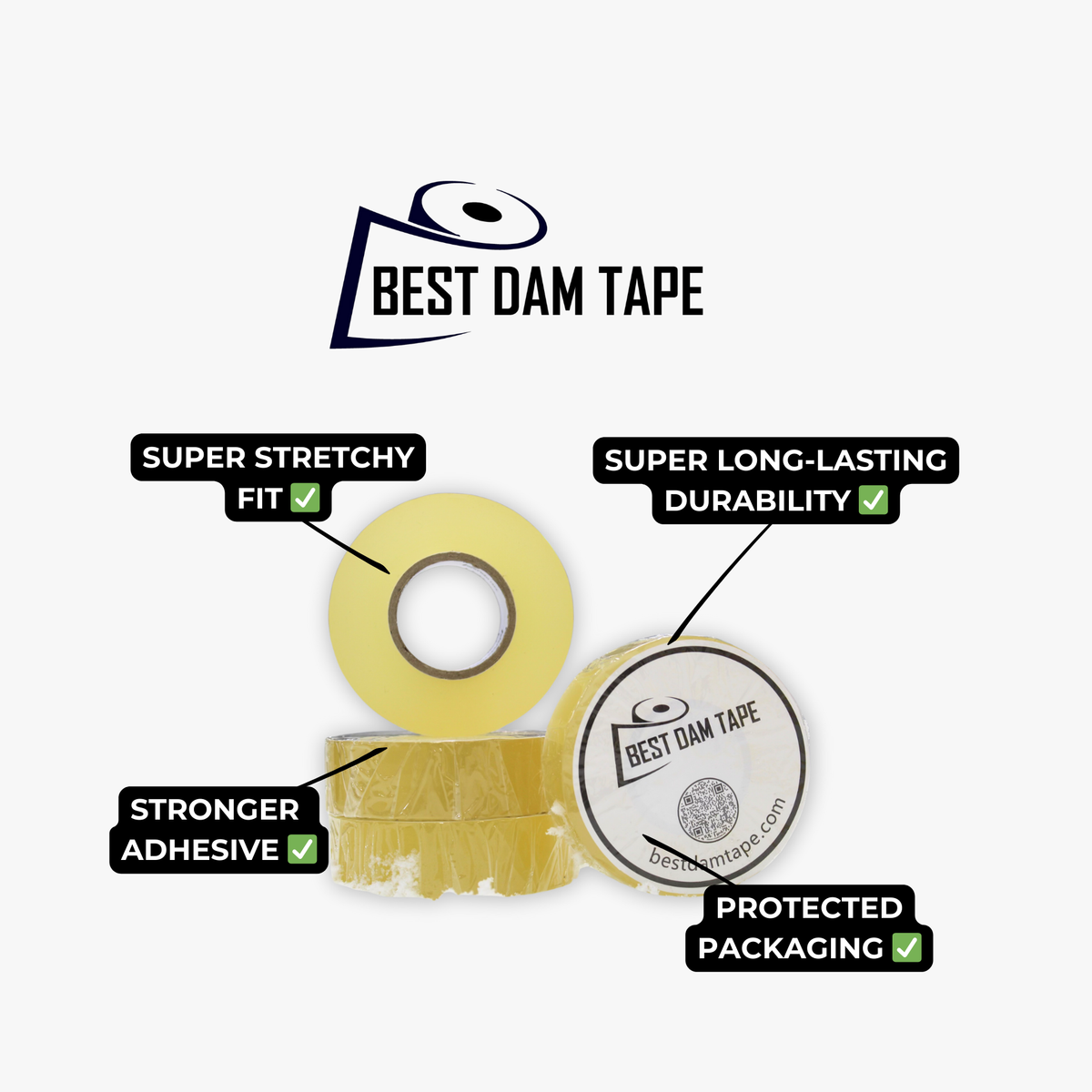
Consistency: High-quality tape like Best Dam Tape maintains uniform thickness across the entire roll. This consistency is crucial when you're building specific thickness zones—inconsistent tape makes precision impossible.
Adhesive Performance: When you're using fewer layers of tape (which many smaller-handed players prefer), each layer needs to grip reliably. Premium adhesive means your thinner grip doesn't shift or slide during play.
Durability: Smaller hands often mean lighter grip pressure, which sounds like an advantage for tape longevity. But if you're using precise, minimal taping, that tape needs to last because re-taping frequently disrupts your carefully calibrated setup.
Perfect for customized grips: Get Best Dam Tape's hockey tape with consistent thickness for precision taping. Teams and programs can save with our bulk ordering.
Troubleshooting Common Issues
Even with the right approach, you might encounter some trial-and-error. Here's how to solve common problems.
Problem: Knob feels too big even when using compact design. Solution: Try the minimal knob approach with just 0.75 inches of buildup. You might need less than you think.
Problem: Hand slides down shaft during play. Solution: Add slightly more texture or one additional layer to your top-hand zone. Or check if your gloves are too worn—slippery glove palms contribute to this issue.
Problem: Blisters despite proper sizing. Solution: Check your grip pressure. You might be gripping too hard out of habit. Also ensure your knob isn't forcing your hand into an angled position that creates friction points.
Problem: Grip feels good in warmups but uncomfortable in games. Solution: Your hands likely swell slightly during intense play. Consider building your grip after light exercise so your hands are closer to game size.
Making It Your Own
The patterns and dimensions in this guide are starting points, not rules. Your perfect grip is discovered through experimentation and honest feedback from your hands and performance.
Start with the compact cylinder knob and moderate thickness approach. Use it for a full practice. Pay attention to any discomfort, fatigue, or control issues. Make one adjustment at a time: either knob size, overall thickness, or thickness distribution. Test again. Gradually, you'll dial in exactly what works for your hands.
Remember, professional players spend years refining their preferences. Give yourself permission to experiment and trust what feels right.
When your grip truly fits your hands: not some generic standard, but your actual biomechanics. Hockey becomes more intuitive, more comfortable, and more fun. That's what equipment customization should do: remove barriers between you and your best performance.
Your hands are unique. Your grip should be too.